The 2026 Legal Audit: Your Ultimate Guide to Getting Your Affairs in Order for the New Year
As we hit the middle of January, after a well deserved break, Christchurch starts to wind back up again for the up coming year.
We naturally start thinking about our New Year’s resolutions. Usually, these look like: “Join the gym,” “Drink less coffee,” or “Finally paint the spare room.”
But there is a different kind of resolution—one that won’t give you abs, but will give you something arguably more valuable: Peace of mind.
We are talking about your Legal Life Admin.
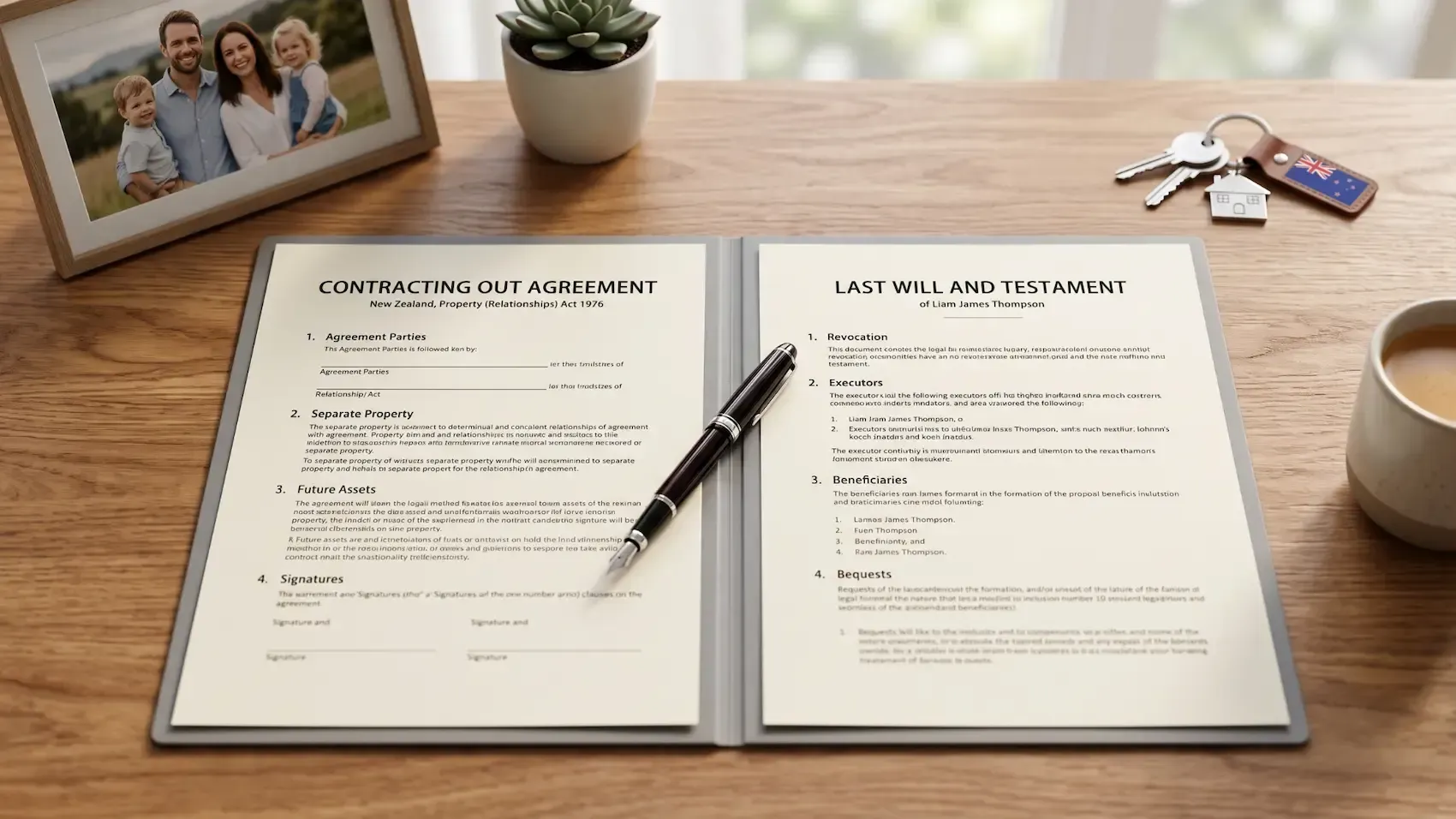
At Weston Ward & Lascelles, we see it every January. The "New Year Panic." People realise that another year has passed where they didn’t update their Will, didn’t sign that Contracting Out Agreement, or didn’t check if their Family Trust is actually compliant with the new laws.
2026 is the year to stop procrastinating.
This isn’t just about ticking boxes; it’s about designing a safety net for your future self. Whether you are a business owner, a parent, a retiree, or a first-home buyer, your legal needs have likely evolved since you last checked them.
In this guide:
- Wills & Estates: The foundation of your plan
- Enduring Powers of Attorney: Your safety net
- Family Trusts: Review or remove?
- Relationship Property: Moving in or moving on
- Business Health Check: protecting your livelihood
- Digital Legacy:
Passwords & Crypto

1. The Foundation: Wills & Estate Planning
If you take only one thing away from this article, let it be this: If you have assets, or you have children, you need a current Will.
It is a common misconception that Wills are only for the elderly. In reality, a Will is a document for the living. It tells the people you love exactly what to do when you aren’t there to guide them.
Why "I don't have much" is a dangerous mindset
Many Cantabrians think, “I don’t own a mansion, so I don’t need a Will.” But do you have KiwiSaver? Do you have a car? Do you have debt? Do you have a blended family?
If you die "Intestate" (without a Will), the Administration Act 1969 kicks in. This is a rigid, one-size-fits-all formula from over 50 years ago. It decides who gets your money, and it rarely matches what modern families want.
- The Blended Family Trap: If you have a new partner and children from a previous relationship, dying without a Will can be a disaster. The law might prioritise your new partner over your children, unintentionally disinheriting them.
- The KiwiSaver Lock: KiwiSaver balance over $40,000 (new threshold for Probate)? If you die without a Will, your family cannot just access it. They have to go to the High Court to get "Letters of Administration." This takes months and costs thousands in legal fees—money that your family might need urgently for a funeral or mortgage payments.
The 2026 Will Checklist
If you already have a Will, don't pat yourself on the back just yet. Pull it out of the drawer. Does it survive the "Three D's" test?
- Dates: Was it written more than 5 years ago? Relationships change. Assets change. Laws change.
- Deaths: Is your Executor still alive? Are they still capable? We often see Wills appointing an executor who is now in their 80s and suffering from dementia. You need a backup plan.
- Dependants: Did you appoint a Testamentary Guardian for your minor children? If you pass away, who physically cares for your kids? If you don’t name them in your Will, the Family Court decides.
Your Resolution: Locate your Will. Read it. If it references a partner you broke up with in 2019, or an asset you sold in 2022, contact our team immediately.

2. The Safety Net: Enduring Powers of Attorney (EPOA)
A Will protects your family if you die. Enduring Powers of Attorney (EPOA) protect you if you live—but lose the capacity to make decisions.
The "It won't happen to me" myth
We tend to associate EPOAs with Alzheimer’s and old age. But at Weston Ward & Lascelles, we help clients of all ages.
- What if you have a car accident on the way to Akaroa?
- What if you suffer a stroke at 45?
- What if you are stuck overseas and need someone to sign documents for you?
If you lose mental capacity (even temporarily due to a coma or head injury) and you do not have an EPOA, your family is stuck. They cannot access your bank accounts. They cannot pay your mortgage. They cannot sell your house to pay for your care.
Their only option is to apply to the Family Court for a "Welfare Guardian" and "Property Manager" order. This is public, expensive, stressful, and slow.
The two documents you need
For 2026, ensure you have both types of EPOA in place:
- Property: This covers your money and assets. You can activate this immediately (so your spouse can sign for you while you are mentally capable but busy) or only if you lose capacity.
- Personal Care & Welfare: This covers your health, where you live, and medical treatments. It only activates if a doctor certifies you cannot decide for yourself.
Your Resolution: Ask yourself, "If I couldn't speak for myself tomorrow, who do I trust to speak for me?" If that person isn't legally appointed, you need an EPOA.

3. The Asset Shield: Family Trusts
Ah, the Family Trust. For decades, this was the classic Kiwi way to protect the family home. But the landscape has shifted dramatically.
Since the introduction of the Trusts Act 2019 and recent tax rate changes, Trusts are under the microscope. 2026 is the year to decide: Review it or Remove it.
The Compliance Burden
Being a Trustee is no longer a symbolic role. It is a legal job. The Act requires you to:
- Hold mandatory documents (Deed, variations, accounts).
- Keep beneficiaries informed (Basic Trust Information must be provided to beneficiaries—you can't keep secrets anymore).
- Invest prudently.
If you have a "sleeping trust" that you haven't looked at in 10 years, you are likely in breach of the Act. This exposes you personally to being sued by beneficiaries.
The "Winding Up" Trend
We are seeing a massive wave of Cantabrians winding up (closing) their Family Trusts. Why?
- Cost vs. Benefit: The cost of annual accounting, legal compliance, and tax filing often outweighs the benefits for a simple family home.
- Tax Rates: With the Trustee tax rate now aligned with the top personal rate (39%), the tax advantages are gone for many people.
However, Trusts are still incredibly powerful for:
- Asset Protection: Protecting against creditors if you own a business.
- Relationship Property: Protecting assets for your children against future partners.
- Vulnerable Children: Managing money for a child who cannot manage it themselves.
Your Resolution: Book a Trust Review. We will sit down with you and do a cost-benefit analysis. Does the Trust still serve a purpose? If yes, let's make it compliant. If no, let's wind it up properly to stop the fees.

4. The Relationship Reality Check
January is statistically the busiest month for Family Lawyers. The stress of Christmas, the financial pressure of the holidays, and the forced proximity often push rocky relationships to the breaking point.
But "Relationship Property" isn't just about breakups. It's about clarity.
Moving in together in 2026?
If you are in a de facto relationship (living together for 3 years), the law treats you largely the same as a married couple. This means your partner could have a claim to half your assets—including the house you owned before you met them.
- The Fix: A Contracting Out Agreement (commonly called a Prenup). This allows you to ring-fence your pre-relationship assets (like your house or KiwiSaver) so they remain yours, no matter what happens. It’s not unromantic; it’s practical. It removes the unspoken anxiety about money from the relationship.
Separating in 2026?
If you decide to part ways, do not rely on a handshake deal.
- The Trap: We often see couples who split up, sell the house, and split the cash 50/50 without a legal agreement. Five years later, one partner sues the other for a share of their superannuation or business.
- The Fix: A Separation Agreement. This is a legally binding "clean break." Once signed and certified by lawyers, neither party can come back for more later. It creates a line in the sand so you can both move on.
Your Resolution: If you are serious about your partner, be serious about your finances. Have the awkward conversation now, when you are happy, rather than later when you are angry.

5. The Business Backbone
If you are a business owner, your "Life Admin" is double the workload. 2026 is predicted to be a year of economic recovery, so your business needs to be watertight to grow.
The "Business Prenup" (Shareholder Agreements)
If you are in business with someone else, what happens if:
- They want to sell their shares to a stranger?
- They die, and their spouse inherits their shares (and starts turning up to meetings)?
- They stop working but still want their profit share?
- You want to retire but there’s no agreement about buying you out and or at what price
Without a Shareholder Agreement, you are relying on the Companies Act, which is often vague on these matters. A Shareholder Agreement is your rulebook. It sets the strategy before the fight starts.
Terms of Trade & Privacy
When was the last time you updated your Terms of Trade? If they are from 2018, they probably don't cover you for the current economic climate (e.g., ability to charge interest on late payments, legal fees incurred in debt recovery and or retaining ownership of goods until paid). Also, with the Privacy Act changes, does your website have a compliant Privacy Policy?
Your Resolution: Treat your business documents like your machinery or your IT. They need maintenance. A quick review of your Terms of Trade could save you thousands.

6. Bonus Pillar: The Digital Legacy (Passwords & Crypto)
In 2026, our lives are increasingly digital, yet our legal documents often remain stubbornly analogue. If you were to pass away tomorrow, would your executor know how to access your online life? Or would your precious family photos, emails, and investments be locked away in the cloud forever?
Cryptocurrency & Digital Wallets
If you hold Bitcoin, Ethereum, or other digital assets, these do not exist in a bank vault. They live on a blockchain, accessible only via a private key or seed phrase.
- The Risk: If you take your private keys to the grave, that money is gone. Permanently. It cannot be recovered by a court order.
- The Fix: Do not write your passwords in your Will (Wills become public documents after probate). Instead, create a secure "Digital Memorandum" – a physical document referenced in your Will but stored separately with your lawyer or in a safe, containing instructions on how to access your digital wallets.
The "Password Purgatory"
We often see executors who can walk into a bank with a death certificate and access funds, but cannot access the deceased’s Apple ID or Google Drive to retrieve sentimental photos. Tech giants have strict privacy policies that often do not recognise traditional Wills.
- The Fix: Most platforms (Apple, Google, Facebook) now have a "Legacy Contact" feature. This allows you to nominate someone to access your account after you die. Action: Set this up in your phone settings today. It takes 2 minutes. In addition, these details should be added to your digital memorandum.
Your Resolution: Audit your digital footprint, ensuring your Executor isn't left guessing passwords or fighting with Apple support.

How to tackle the list without being overwhelmed
Looking at the list above—Wills, EPOAs, Trusts, Relationships, Business, Digital Assets—it can feel like a mountain.
But you don't climb a mountain in one jump. You do it one step at a time.
Your Action Plan for 2026:
- Week 1: Find your Will. Read it. Does it still make sense?
- Week 2: Talk to your partner about EPOAs. "Who would speak for us?"
- Week 3: Email your lawyer about the Family Trust. "Is this still worth it and if so, is it up to date?"
We are here to help
At Weston Ward & Lascelles Ltd, we have been helping Cantabrians get their affairs in order for over 140 years. We have probably seen every variation of family drama, business dispute, and estate confusion you can imagine—and we know how to plan for and tackle them.
We don't believe in scary legal jargon. We believe in practical, local advice that helps you sleep better at night.
Let’s make 2026 the year you finally get it sorted.
Contact us today to schedule a "New Year Legal Audit." Whether you just need a simple Will update or a complex Trust restructure, our team is ready to help you design a secure future.
Legal Services