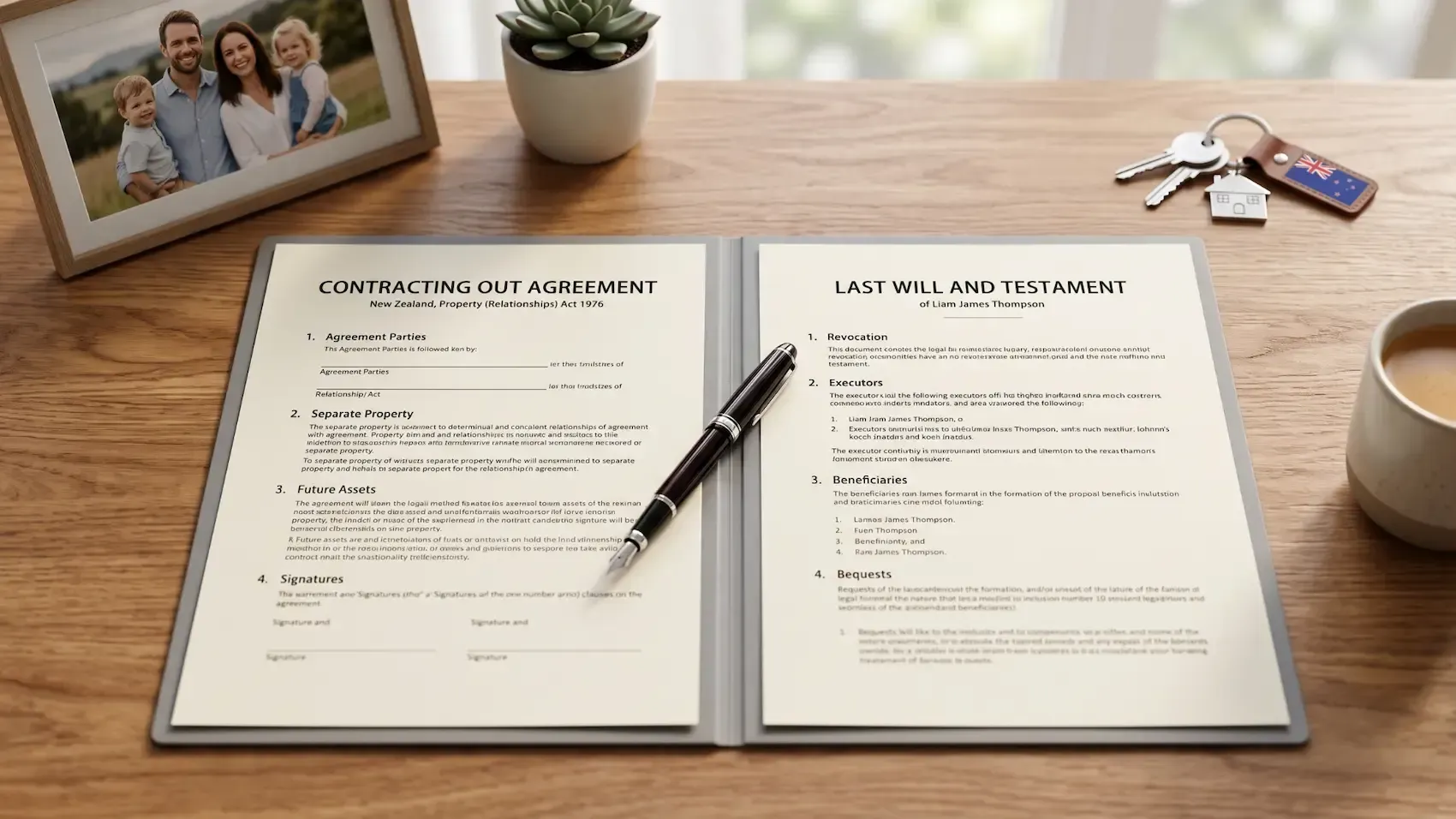
Navigating Estate Planning for Blended Families in Canterbury
Modern families in New Zealand come in all shapes and sizes. With second marriages, de facto relationships, stepchildren, and shared property becoming increasingly common across Christchurch and Canterbury, the traditional "standard Will" is no longer fit for purpose for many households.
Estate planning for a blended family involves a delicate balancing act. You want to ensure your current partner or spouse is comfortably provided for if you pass away first. At the same time, you want confidence that your biological children ultimately receive the inheritance you intend for them.
Without careful legal planning, blended family arrangements can unintentionally result in biological children being disinherited or lead to costly and stressful legal disputes. Understanding the legal tools available allows you to protect everyone you love in a fair and transparent way.
The Hidden Trap of Simple "Mirror Wills"
One of the most common estate planning mistakes made by blended families is relying on traditional Mirror Wills.
In a standard Mirror Will arrangement, each partner leaves everything to the other on the first death, with the expectation that, after the second death, the remaining estate will be divided amongst all of the children.
While this sounds fair on paper, it carries a significant legal risk.
- First Death: Partner A dies, leaving their entire estate to Partner B.
- Freedom to Change: Once Partner B owns those assets outright, they are generally free to change their own Will at any time.
- Unintended Disinheritance: Partner B may later remarry, become estranged from Partner A's children, or simply decide to leave their estate differently.
When Partner B eventually dies, Partner A's biological children may receive little or nothing. Situations like this occur more often than many families realise, but they can often be avoided with appropriate estate planning.

Key Legal Strategies for Blended Family Estate Planning
To help reduce the risk of future conflict and better protect both your current partner and your biological children, a number of legal strategies can be incorporated into your estate plan.
1. Holding Property as Tenants in Common
How you own your property can have a significant impact on your estate plan.
Many couples own their home as Joint Tenants. Under a joint tenancy, the right of survivorship applies. This means that when one owner dies, their interest automatically passes to the surviving owner, regardless of what their Will says. The deceased's share does not form part of their estate and therefore cannot be dealt with under their Will.
For blended families, this can frustrate the intentions of an otherwise carefully drafted estate plan.
Holding property as Tenants in Common is often a more suitable arrangement. Under this structure:
- Each owner holds a distinct share of the property (commonly 50%, although any agreed proportion is possible).
- Each owner's share forms part of their estate on death.
- That share can then be dealt with in accordance with the terms of their Will.
This provides considerably greater flexibility. Rather than leaving your share of the family home outright to your surviving partner, your Will can provide them with a life interest (or other appropriate right of occupation). This allows your surviving partner to continue living in the home for their lifetime, or until a specified event such as entering residential care.
Depending on how the Will is drafted, a life interest may also permit your partner to receive income generated from estate assets and, where appropriate, allow the property to be sold and replaced with a more suitable home.
When the life interest eventually comes to an end, your share of the property passes to your chosen beneficiaries, commonly your biological children. This approach can provide long-term security for your surviving partner while helping preserve your intended inheritance for your children.
Changing ownership from Joint Tenants to Tenants in Common is generally a straightforward legal process that our Christchurch property team routinely assists clients with as part of their broader estate planning.
2. Contracting-Out Agreements (Section 21 Agreements)
Under the Property (Relationships) Act 1976, when a couple has lived together in a qualifying relationship for three years or more, relationship property (including the family home, regardless of whose name appears on the title) is generally divided equally if the relationship ends through separation or death.
A Contracting-Out Agreement (commonly referred to as a relationship property agreement or "prenup") allows couples to formally record:
- Which assets remain separate property.
- Which assets are relationship property.
- How assets will be divided if the relationship ends.
By protecting pre-relationship assets—such as equity in a previous home or inherited funds—you can better preserve those assets for your intended beneficiaries as part of your overall estate planning.
3. Family Trusts
A properly structured Family Trust can separate asset ownership from an individual's estate. Assets placed into a trust are managed by appointed trustees for the benefit of nominated beneficiaries, such as your partner and children.
For blended families, the use of independent professional trustees can help ensure that trust decisions are made impartially, balancing the needs of a surviving partner with the long-term preservation of capital for children.
Preventing Inheritance Claims Under the Family Protection Act 1955
In New Zealand, certain family members may be entitled to challenge a Will if they believe adequate provision has not been made for their proper maintenance and support.
The Family Protection Act 1955 recognises that a deceased person may owe moral duties to certain close family members, including:
- A surviving spouse or de facto partner.
- Biological and legally adopted children.
- Other eligible family members in circumstances recognised by the legislation.
Where appropriate, careful estate planning can help reduce the likelihood of future disputes. Practical steps include:
- Providing clear written explanations: A contemporaneous statement explaining your decisions may assist in understanding your intentions.
- Avoiding unnecessary exclusion: Where appropriate, making balanced provision may reduce the risk of litigation.
- Obtaining independent legal advice: Professionally prepared estate planning documents are more likely to reflect your intentions clearly and effectively.

Updating Your Estate Plan During Life Transitions
Estate planning should be reviewed whenever significant life events occur.
Examples include:
- Marriage: Under New Zealand law, marriage generally revokes an existing Will unless it was made in contemplation of that marriage.
- Separation or Divorce: Changes in your relationship should prompt an immediate review of your Will, EPAs, trusts, life insurance and KiwiSaver nominations.
- Acquiring Significant Assets: Purchasing property, starting a business or receiving an inheritance are all good reasons to review your estate plan.
Regular reviews help ensure your estate planning continues to reflect your wishes and current circumstances.
How Weston Ward & Lascelles Supports Canterbury Families
Balancing the needs of a current partner with the interests of children from previous relationships requires careful planning and tailored legal advice.
At Weston Ward & Lascelles, our Christchurch estate planning lawyers have over 140 years of experience helping Canterbury families navigate complex estate planning issues. We work closely with our clients to develop practical, legally robust solutions that reflect their individual circumstances and provide confidence that their wishes will be carried out.
Whether you are preparing your first Will, updating an existing estate plan following a new relationship, or considering options such as life interests, relationship property agreements or family trusts, we can help you put the right structure in place.
Contact our Christchurch office today to arrange a consultation and discuss an estate plan tailored to your family's unique circumstances.
Legal Services